Why Aluminum Machining Tops Automation Equipment Choice: Lightweight, Precision & Long Life
Date:2026-05-05Article editor:Starting Point PrecisionViews:482When engineers design robotic arms, pick‑and‑place systems, or CNC gantries, the material decision often comes down to one winner: aluminum. Its unique balance of low weight, machinability, and durability has made aluminum machining the tops automation equipment choice across industries. Below we explore the technical reasons behind this dominance, backed by data and real‑world applications.
1. Lightweight Construction Boosts Speed & Energy Savings
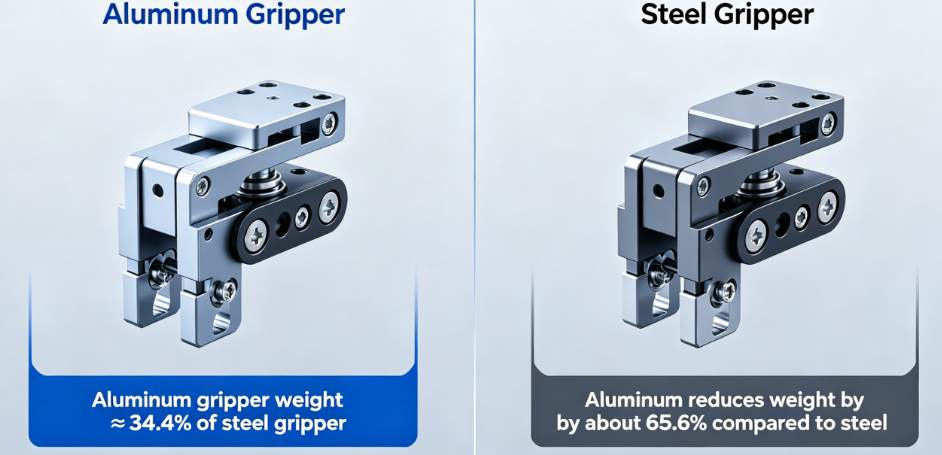
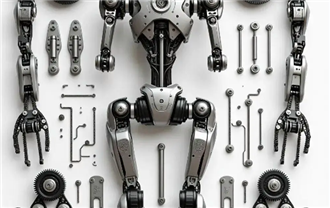
Aluminum’s density is roughly one‑third that of steel. For any moving part—linear guides, end effectors, or rotary tables—this translates into lower inertia, faster acceleration, and reduced motor load. A typical aluminum robotic gripper can cycle 30% quicker than its steel counterpart while consuming less power. As shown in the follow image, the weight reduction alone often justifies the material switch.
2. Superior Machinability for Complex, Tight‑Tolerance Parts
Automation equipment frequently requires cooling channels, sensor pockets, and mounting features with tolerances of ±0.005 mm. Aluminum alloys (e.g., 6061, 7075) machine 3–5 times faster than stainless steel, extending tool life and reducing cycle costs. Chip evacuation is clean, and surface finishes can reach Ra 0.8 μm without secondary grinding.
According to the Machining Technology Report from SME , aluminum’s machinability index is nearly 200% higher than common steel grades, making it the preferred material for high‑mix, low‑volume automation components.
Unlike carbon steel, aluminum forms a self‑repairing oxide layer that resists rust in humid or chemical‑laden environments—common in food packaging, pharmaceutical lines, and outdoor automated kiosks. This eliminates painting or plating expenses. For high‑wear areas (e.g., conveyor guides), anodizing the machined part can triple surface hardness.
Modern automation integrates embedded sensors, heat sinks, and even grounding paths. Aluminum’s thermal conductivity (~205 W/m·K) efficiently dissipates heat from motors and electronics, preventing thermal drift. Its electrical conductivity (~37% IACS) allows the machined frame to act as a grounding bus, reducing wiring complexity.
Although raw aluminum costs more than some plastics, high‑speed machining and nearly 100% recyclability drastically lower total ownership cost. Scrap chips have high resale value, and lighter components permit smaller, cheaper actuators. For production runs above 500 units, aluminum machining typically delivers the best ROI.
From energy‑saving dynamics to corrosion resistance and design flexibility, aluminum machining consistently tops automation equipment choice in 2025. Whether you need a prototype or full‑scale production, selecting the right alloy and machining process ensures reliable, high‑speed automated systems.
Q1: Is aluminum always better than steel for automation equipment?
No. For heavy‑load structural bases or high‑impact zones (e.g., forging presses), steel is still superior due to its higher tensile strength. Aluminum excels in moving parts, frames, and heat‑sensitive applications.
Q2: Does aluminum machining require special cutting tools?
Standard carbide tools work well, but polished flutes and non‑stick coatings (like TiB2 or DLC) prevent built‑up edge. High‑pressure coolant is recommended for deep holes.
Q3: Can aluminum parts handle repetitive stress in high‑speed pick‑and‑place machines?
Yes, with proper alloy selection (e.g., 7075‑T6) and design that avoids sharp corners. Fatigue limits are lower than steel, but for cyclic loads under 200 MPa, aluminum lasts over 5 million cycles—sufficient for most automation tasks.
Q4: What aluminum grade should I choose for my automation part?
6061: General purpose, weldable, ideal for frames and brackets.
7075: High strength, best for grippers and high‑stress links.
5083: Marine‑grade, excellent for wet or chemical environments.
Add: Building 3No.277 Zhen'an Middle Road, Chang'an Town,Dongguan,Guangdong, China
Tel:+86-769-82855591
Copyright © 2019 All Rights Reserved Dongguan Start Precision Technology Co., Ltd. Tel: +86-769-82855591
Add: No. 277 Zhen'an Middle Road, Chang'an Town, Dongguan, Guangdong, China



 中文版
中文版 English