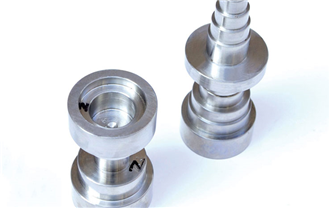
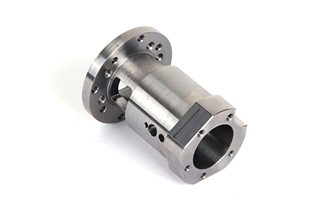
Selecting the right grade for stainless steel turning parts is a critical decision that directly impacts product longevity, safety, and overall project economics. While 304 and 316L are the two most common austenitic grades, their distinct differences in
1. IntroductionIn the demanding realm of aerospace manufacturing, the production of high‑precisionAluminum CNC Turning Partsrepresents a critical intersection of material science, mechanical engineering, and advanced machining strategy. As aircraft design
In today’s fast‑paced engineering environment, prototype and low‑batch production of critical drivetrain components demands both agility and uncompromising precision.Low‑volume precision machininghas become the preferred strategy for manufacturing high‑to
In the rapidly evolving field of precision manufacturing, selecting the right partner for aluminum alloy components is critical to performance, lead time, and cost. AChina CNC machining factorythat specialises in aluminium offers not only competitive pric
The Unseen Barrier in Prototype MachiningFor product engineers and toolmakers,rapid prototype CNC machiningis the gold standard for validating form, fit, and function. Yet, a critical challenge emerges when the prototype involves a complex mold core, a de
In today’s volatile market, manufacturers face relentless pressure to handleLow Volume Machiningorders without sacrificing efficiency. The era of mass production is giving way toHigh-Mix Low-Volume Production Flexibility—a paradigm where agility, quick re
IntroductionIn product engineering,rapid prototype CNC machiningis the definitive bridge between virtual CAD models and physical testing. Unlike additive methods, CNC subtractive manufacturing produces parts with genuine material properties—no anisotropy,
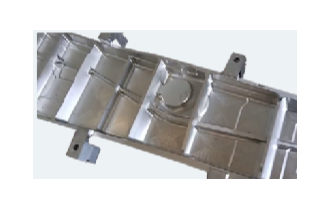
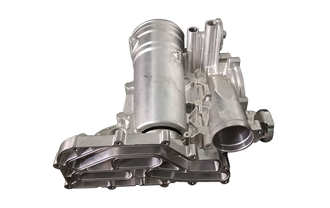
Reducing production costs for complex aluminium die‑cast components like engine integrated oil filter housings is a persistent challenge. These parts require drilling intersecting oil galleries (Ø4–Ø12 mm, depth‑to‑diameter up to 15:1), milling flat seali
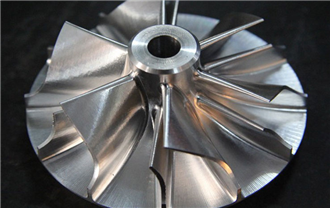
For aerospace and energy sectors, impeller and turbine prototypes demand free‑form surfaces, thin walls, and tight blade‑to‑blade channels. Traditional 3‑axis machining often requires multiple setups, sacrificing both speed and surface integrity.5‑axis ra
In precision manufacturing, the quality of a finished part is determined long before the first chip is cut. At ourChina CNC machining factory, we have built a closed-loop supply chain that begins with rigorously vetted raw material suppliers and ends with
For product developers and engineers, the journey from concept to physical part has long been bottlenecked by one daunting obstacle: the cost of tooling. Injection molding and die casting require custom molds that can cost anywhere from$10,000 to over $10
In modern production environments, tooling and fixtures are not mere accessories—they are the foundation of repeatable quality and operational throughput. The geometric accuracy, surface finish, and thermal stability of jigs, pallets, and gauge pins direc