CNC Machining Parts Compatibility: A Guide to Matching with Your CNC Machines
Date:2026-02-02Article editor:Starting Point PrecisionViews:704Procuring high-quality CNC machined parts is only half the battle. Ensuring they are fully compatible with your specific CNC machines is critical for operational efficiency, tool life, and final part quality. An incompatible part can lead to machine crashes, poor surface finishes, and costly downtime. This guide outlines the key parameters you must verify to ensure a perfect match between your parts and your machinery.
1. Machine Tool Interface & Workholding
The most fundamental compatibility layer is the physical connection. This starts with the tool holder interface (e.g., CAT, BT, HSK). Using a BT40 tool in a CAT40 spindle is impossible and attempting to use the wrong pull stud can cause catastrophic failure. Always confirm the spindle taper and retention system.
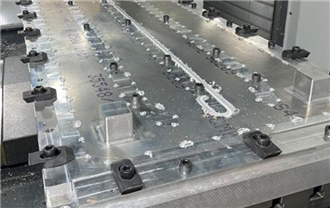
Next, consider workholding. The part's size and shape must be compatible with your machine's table, vise, or fixture. Check the table's T-slot and maximum clamping area. A part that overhangs or cannot be securely held will vibrate, ruining precision. Our guide on offers more insights.
2. Control System & Programming Compatibility
Your machine's CNC controller (e.g., Fanuc, Siemens, Heidenhain) interprets the G-code. While standard G&M codes are largely universal, post-processors are machine-specific. A program generated for a Haas mill might not run optimally on a Mazak without a proper post-processor. Ensure your CAD/CAM software is configured for your exact machine model. Resources like the CNC Programming Handbook can be invaluable.
3. Machine Envelope & Axes Capabilities
A part's digital model must fit within your machine's working envelope. This includes the X, Y, and Z travel limits. Furthermore, verify if the part's geometry requires multi-axis capabilities. A complex part designed for a 5-axis machine cannot be efficiently produced on a 3-axis mill without multiple setups, affecting accuracy and cost.
4. Spindle Power, Torque, and Speed Range
The part material and operations dictate spindle requirements. Heavy milling in stainless steel demands high torque and horsepower. Conversely, precision finishing in aluminum with small tools requires high RPM. Mismatching here leads to tool breakage or unacceptable cycle times. Consult your machine's power/torque curve diagram and compare it to the cutting parameters required for the part.
5. Tooling & Coolant Considerations
Compatibility extends to the supporting ecosystem. Confirm that the required cutting tool shank diameters (e.g., 1/2", 10mm) are within your machine's tool holder capacity and that your automatic tool changer (ATC) has enough stations for the entire operation sequence.
Also, consider coolant requirements. Some parts or materials may need high-pressure coolant through the spindle, which not all machines support. Verify compatibility with specialty coolants for materials like titanium.
Conclusion: The Compatibility Checklist
Before ordering or manufacturing any part, run through this checklist:
Physical Interface: Spindle taper, workholding.
Control: Correct post-processor, G-code dialect.
Geometry: Fits within travel limits, matches axes count.
Performance: Spindle power, torque, and RPM suit the material/operations.
Supporting Systems: Tooling size, ATC capacity, coolant type.
Taking the time to verify CNC machining parts compatibility is a proactive investment that prevents waste and maximizes productivity.. Always consult with your machine operator or manufacturing engineer to finalize compatibility checks.
Add: Building 3No.277 Zhen'an Middle Road, Chang'an Town,Dongguan,Guangdong, China
Tel:+86-769-82855591
Copyright © 2019 All Rights Reserved Dongguan Start Precision Technology Co., Ltd. Tel: +86-769-82855591
Add: No. 277 Zhen'an Middle Road, Chang'an Town, Dongguan, Guangdong, China



 中文版
中文版 English