When to Replace CNC Machining Parts: Wear & Tear Indicators
Date:2026-02-14Article editor:Starting Point PrecisionViews:495Precision manufacturing relies on the consistent performance of CNC machining parts. While routine maintenance can significantly extend the life of these components, no part lasts forever. Knowing exactly when to replace worn components is critical to preventing catastrophic machine failures, avoiding scrapped workpieces, and maintaining tight tolerances. Operating with worn parts is a false economy; the cost of an unplanned shutdown almost always exceeds the price of a replacement part. Here are the key wear and tear indicators that signal it is time for a replacement.
1. Dimensional Inaccuracy in Finished Products
The most telling sign that your machine components are failing is the quality of the parts they produce.
Out of Tolerance: If you notice a gradual drift in measurements—holes becoming slightly larger, surfaces inconsistently flat—it often points to mechanical wear.
Repeatability Issues: If the machine struggles to return to the same position consistently (poor repeatability), the ball screws or linear guides are likely worn and require immediate attention.
2. Unusual Noises and Vibrations
Your CNC machine communicates its health through sound. A change in its acoustic signature is a red flag.
Grinding or Rumbling: This suggests bearing failure within the spindle or issues with the guideways.
Chatter Marks: If you see visible chatter marks on machined surfaces that aren't related to tooling or speeds/feeds, it could indicate loose or worn mechanical components like spindles or couplings.
Increased Vibration: Excessive vibration during operation accelerates wear on every other component. If isolation mounts or structural parts are vibrating excessively, they may be fatigued.
3. Visible Physical Damage
Sometimes, the indicators are visible to the naked eye during routine inspections.
Corrosion and Pitting: Rust or small pits on precision surfaces like ways and chucks create rough spots that hinder smooth motion and holding power.
Deformation: Bent shafts, warped housings, or stretched bolts indicate mechanical overload and necessitate immediate replacement.
Cracks: Even hairline cracks in structural components or tool holders are a safety hazard and a sign of imminent failure.
4. Spindle Runout
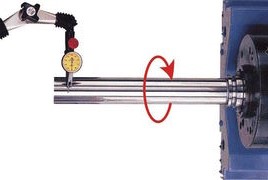
Spindle health is paramount. You can measure runout using a dial indicator placed against a precision test bar held in the spindle.
Excessive Wobble: If the runout exceeds the manufacturer's specifications, the spindle bearings are worn. This leads to poor surface finish, accelerated tool wear, and broken cutting tools. Continuing to use a spindle with high runout risks damaging the entire spindle cartridge.
5. Increased Operating Temperatures
Heat is a byproduct of friction, and excessive friction means something is wrong.
Hot Spots: If a motor housing, bearing block, or ball screw is noticeably hotter than usual to the touch (or via thermal imaging), the internal lubricant may have broken down, or the component may be binding.
Thermal Growth: Excess heat causes parts to expand, which throws off machine geometry and accuracy.
6. Backlash in Drive Systems
Backlash refers to the "slop" or lost motion in a mechanical system when direction is reversed.
The "Lash" Test: In CNC machining, if you command a move in one direction and then reverse, the axis may hesitate before moving back. This play in the system is usually due to wear in the ball screw nut or thrust bearings. It directly impacts contouring accuracy and cornering precision.
7. Age and Usage Cycles
Even with perfect maintenance, materials fatigue.
Lifecycle Limits: Components like spindle bearings, drawbars, and drive belts have a rated lifespan in hours of operation. Track your run time and replace these items based on the manufacturer's recommendations, before they fail.
Outdated Technology: Sometimes, replacement isn't about wear, but about capability. Older controllers or drives may lack the processing speed for modern high-efficiency machining techniques. Upgrading parts like servo motors can breathe new life into a machine.
The Cost of Delay
Ignoring these indicators leads to a domino effect. A worn guide way can cause a ball screw to bind, which overloads a servo motor, leading to drive failure. What started as a $500 part replacement becomes a $10.000 repair bill.
To minimize downtime, it is wise to keep critical spares on hand. Sourcing high-quality, durable replacements ensures that when the time comes, your machine is back up and running with minimal interruption. For reliable components that meet or exceed OEM standards, many manufacturers trust suppliers like Dongguan Starting Point Precision Technology Co.Ltd for their replacement part needs.
Conclusion
Knowing when to replace CNC machining parts is about vigilance. By monitoring product quality, listening to your machine, and conducting regular physical inspections, you can identify wear indicators early. Proactive replacement ensures operational integrity, protects your valuable raw materials, and keeps your production line profitable.
Add: Building 3No.277 Zhen'an Middle Road, Chang'an Town,Dongguan,Guangdong, China
Tel:+86-769-82855591
Copyright © 2019 All Rights Reserved Dongguan Start Precision Technology Co., Ltd. Tel: +86-769-82855591
Add: No. 277 Zhen'an Middle Road, Chang'an Town, Dongguan, Guangdong, China



 中文版
中文版 English