Customizing CNC Machining Parts: Tailoring to Your Application Needs
Date:2026-02-18Article editor:Starting Point PrecisionViews:539In the world of modern manufacturing, one size rarely fits all. As industries demand more complex geometries, tighter tolerances, and specific material properties, the ability to customize CNC machining parts has become essential. Whether you are developing a life-saving medical device or a high-performance automotive component, tailoring the machining process to your specific application ensures optimal functionality and cost-efficiency.
Understanding Customization in CNC Machining
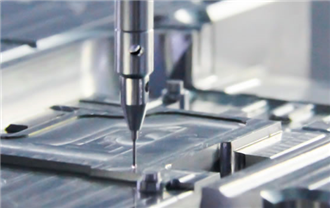
Custom CNC machining is a subtractive manufacturing process where computer-controlled tools shape raw material into a part based on a digital design. Unlike mass production methods that require expensive tooling (like injection molding), CNC machining offers flexibility by producing parts directly from a CAD file. This allows for rapid design changes and production of highly detailed components without the need for a complete retooling of the assembly line.
Learn more about the basics of our CNC Machining Process to see how we handle complex geometries.
Key Customization Options
To truly tailor a part, manufacturers and clients must collaborate on several critical variables:
1. Subprocess Selection
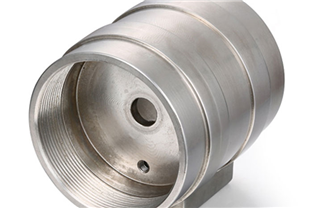
Different part geometries require different machining strategies. For instance, prismatic (block-like) parts are best suited for CNC Milling, while parts with rotational symmetry—such as shafts and bushings—are ideal for CNC Turning. For highly complex components requiring both cylindrical features and flat surfaces, a Mill-Turn Combo or Swiss-type turning is often the best choice, especially for long, slender parts requiring high precision.
For a deep dive into tool geometry, you can refer to this comprehensive guide on cutting tool design from Sandvik Coromant.
2. Tolerance and Precision
Customization also involves defining how precise a part needs to be. While standard tolerances (e.g., ±0.005" for metals) are sufficient for many applications, some industries like aerospace require high precision machining with tolerances as tight as ±0.001". Conversely, for cosmetic prototypes where fit isn't critical, opting for "relaxed tolerances" can significantly lower costs.
3. Custom Tooling and Workholding
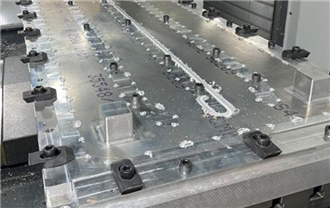
Sometimes, standard off-the-shelf cutting tools cannot achieve a specific feature. In these cases, manufacturers design CNC custom tools. This might involve a specialized reamer for a unique diameter or a custom fixture to hold an oddly shaped workpiece during machining. While custom tooling involves an upfront cost, it drastically reduces cycle times and improves accuracy in mass production scenarios.
Designing for Manufacturability (DFM)
A successful custom project relies heavily on the design phase. Engineers must consider the Design for Manufacturability (DFM) principles to ensure the part can be machined efficiently. Key considerations include:
Cavity Depth: Limiting cavity depth to four times the width ensures tool stability.
Internal Corners: Since milling tools are round, internal vertical corners will always have a radius. Designers should specify a radius that matches a standard tool size to avoid custom tool costs.
Wall Thickness: Very thin walls (below 0.8 mm for metals) can vibrate during machining, leading to inaccuracies or breakage.
Materials and Applications
The choice of material is a critical aspect of customization. Custom CNC services work with a vast array of materials to meet application needs:
Aerospace: Often requires lightweight materials like Titanium and Aluminum to produce structural components and turbine blades that must withstand extreme conditions.
Medical: Utilizes biocompatible materials such as stainless steel or PEEK to manufacture surgical instruments and custom implants.
Automotive: Leverages custom machining for prototyping new engine parts and creating specialized brackets or suspension components.
Electronics: Relies on the precision of CNC to create miniature housings and heat sinks for consumer devices.
The Path from Design to Production
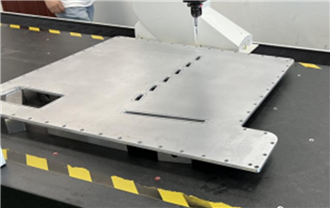
The journey of a custom CNC project begins with a concept and a CAD file. It progresses through material selection, programming (G-code generation), setup, machining, and finally, quality inspection. Partnering with a service provider that offers advanced technical support and clear communication is vital to navigate this process successfully. A reliable partner can conduct a DFM analysis early on to identify potential issues, saving time and money.
Conclusion
Customizing CNC machining parts is about more than just cutting metal; it is about engineering a solution that fits your exact requirements. By understanding the interplay between subprocess selection, material properties, tolerance requirements, and design rules, you can unlock the full potential of your product designs. Whether you need a single prototype or a batch of end-use parts, tailored CNC machining provides the precision and versatility to bring your ideas to life.
Ready to start your project? Request a quote for your custom parts today.
Add: Building 3No.277 Zhen'an Middle Road, Chang'an Town,Dongguan,Guangdong, China
Tel:+86-769-82855591
Copyright © 2019 All Rights Reserved Dongguan Start Precision Technology Co., Ltd. Tel: +86-769-82855591
Add: No. 277 Zhen'an Middle Road, Chang'an Town, Dongguan, Guangdong, China



 中文版
中文版 English