
Brass Precision Machined Parts for Small Batches: A Practical Guide
Date:2026-11-16Article editor:Starting Point PrecisionViews:116Brass precision machined parts are an excellent choice when you need durable, corrosion-resistant components in limited quantities. Brass offers outstanding machinability, good electrical and thermal conductivity, and a pleasing golden finish—making it ideal for prototypes, bridge production, and specialized industrial assemblies. For small batches, the key is pairing the right alloy with flexible CNC processes that avoid excessive tooling costs.
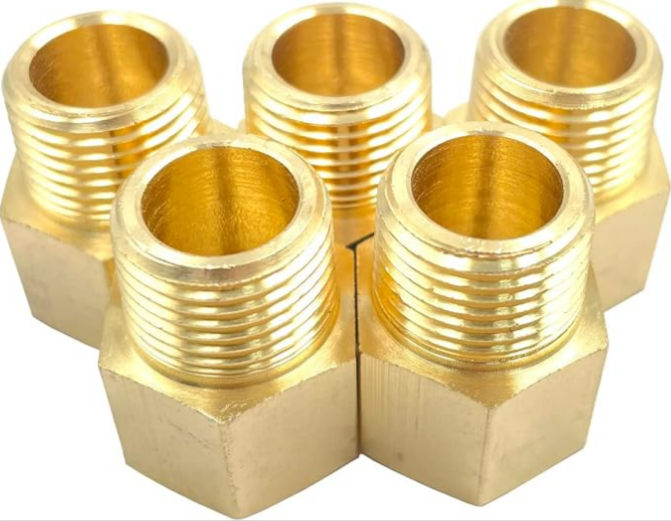
Why Brass Suits Small-Batch Precision Components
Brass (a copper-zinc alloy) machines faster than steel or aluminum in many operations, reducing cycle times and tool wear. It holds tight tolerances well and resists tarnishing in indoor environments. According to the Copper Development Association, free-cutting brass grades such as C36000 offer excellent machinability ratings, which translates directly into lower cost per part—even at low volumes.
Typical brass parts ideal for small batches:
● Electrical connectors and terminals
● Valve bodies and fittings
● Precision gears and bushings
● Sensor housings and instrument components
● Decorative hardware and fasteners
● Pneumatic and hydraulic fittings
● RF shielding components
How We Approach Small-Batch Brass Machining
Small batches (typically 10–5,000 pieces) require a different mindset than mass production. Instead of dedicated dies or long setup runs, we use flexible CNC equipment and quick-change fixtures.
| Challenge | Small-Batch Solution |
| High tooling cost | No hard tooling; use standard or soft jaws |
| Frequent design changes | Program adjustments at the machine |
| Mixed part families | Pallet pools and quick-change vises |
| Tight lead times | Lights-out machining for unattended runs |
| Material variety | Bar-fed turning and mill-turn centers |
Our five-axis precision machining capability is especially useful for brass parts with angled holes, curved slots, or complex geometry—reducing the number of setups and preserving positional accuracy. The equipment list includes a Germany DMG HSC 75 linear five-axis machining center, DMG DMC 835V vertical machining centers, Mazak VCN-510C and HAAS VF3 vertical centers, HAAS EC400 horizontal centers, DMG CTX beta 800 and TAKZAWA NEX-108 CNC turning centers, plus slow wire EDM and precision grinding machines. This mix lets us match the right machine to each brass part’s size, tolerance, and surface finish requirements.
Practical Tips for Your Brass Small-Batch Project
● Choose the right alloy: C36000 for high-speed machining; C26000 for forming; C46400 for marine resistance.
● Specify temper: Half-hard or quarter-hard tempers can improve machined surface finish.
● Consider tumbling or vibratory finishing: Deburrs small batches economically without dedicated fixtures.
● Plan for material lot traceability: Small batches often serve regulated industries; request mill certificates early.
● Use our homepage as a starting point to review capabilities before sending drawings.
Quality and Consistency in Low Volumes
Small batches do not mean relaxed quality. We apply first-article inspection, in-process gauging, and final dimensional reports. For brass parts, key checks include hole diameter, thread pitch, concentricity, and surface roughness. When volumes grow, the same programs and fixtures scale to higher quantities without redesign.
Contact us to discuss your manufacturing requirements. Whether you need ten brass connector bodies or two thousand valve components, we will review your drawings, recommend an alloy and process route, and provide a clear quotation with lead time.
FAQs
1. What is the minimum order quantity for brass precision machined parts?
We typically start from 10 pieces, depending on part complexity and material availability. Prototype and bridge volumes are welcome.
2. How long does a small batch of brass parts take?
Standard lead time is 7–15 working days after drawing approval and material receipt. Complex five-axis parts may require 15–20 days.
3. Can you supply material certificates for brass?
Yes. Mill certificates and material traceability documents are available on request.
4. Which brass alloy do you recommend for electrical connectors?
C36000 free-cutting brass is common for connectors due to its machinability and conductivity. For higher conductivity, C26000 or C22000 may be specified.
5. Do you offer surface finishing for small brass batches?
Yes—deburring, tumbling, nickel plating, and passivation are available through qualified partners.






Add: Building 3No.277 Zhen'an Middle Road, Chang'an Town,Dongguan,Guangdong, China
Tel:+86-769-82855591
Copyright © 2019 All Rights Reserved Dongguan Start Precision Technology Co., Ltd. Tel: +86-769-82855591
Add: No. 277 Zhen'an Middle Road, Chang'an Town, Dongguan, Guangdong, China



 中文版
 English
