Five-Axis Machining Parts Cutting Parameters: Speed, Feed & Depth of Cut
Date:2026-02-24Article editor:Starting Point PrecisionViews:523Introduction
Five-axis CNC machining has revolutionized the production of complex parts—from aerospace impellers to medical implants—by enabling simultaneous tool movement across multiple axes. However, the success of five-axis operations hinges on correctly selecting three fundamental cutting parameters: speed, feed, and depth of cut. These variables directly influence tool life, surface finish, machining time, and overall part quality. This article explores each parameter in detail, offering practical insights for optimizing five-axis machining processes.
1. Cutting Speed (Vc)
Cutting speed refers to the relative velocity between the cutting tool and the workpiece surface, typically expressed in meters per minute (m/min) or surface feet per minute (SFM). In five-axis machining, where tool orientation constantly changes, maintaining optimal cutting speed is critical to avoid excessive heat generation and premature tool wear.
The ideal cutting speed depends on:
● Workpiece material (e.g., aluminum, titanium, hardened steel)
● Tool material and coating (carbide, ceramic, PCD)
● Machine rigidity and coolant application
For example, machining titanium often requires lower speeds (30–60 m/min) compared to aluminum (300–600 m/min). Incorrect speed can lead to built-up edge, poor surface finish, or thermal damage. Refer to manufacturer datasheets or use the formula:
Vc=(π×D×N)/1000
(where D = tool diameter in mm, N = spindle speed in rpm).
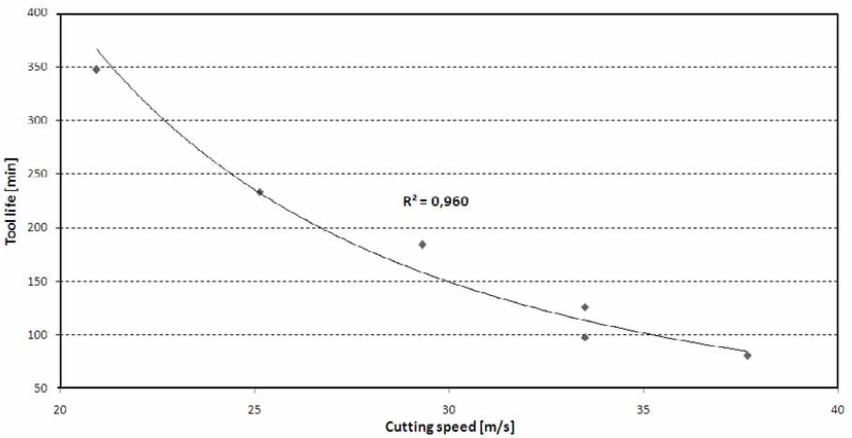
Relationship between cutting speed and tool wear
2. Feed Rate (F)
Feed rate is the speed at which the cutter advances against the workpiece, usually measured in mm/min or inches per minute. In five-axis machining, feed rate must be carefully balanced to ensure chip load consistency, especially during curved or tilted toolpaths.
Key considerations:
● Chip load per tooth (fz): Affects cutting forces and surface integrity.
● Tool deflection: Excessive feed can cause vibration (chatter) and poor accuracy.
● Surface finish requirements: Finishing passes use lower feed rates than roughing.
Modern CAM software can modulate feed rate dynamically to maintain constant chip thickness, particularly in five-axis trochoidal or high-efficiency milling strategies. Always verify with the tool manufacturer’s recommended chip load.
G-Code Tutor Recommended Tool Feed/Speed Chart.
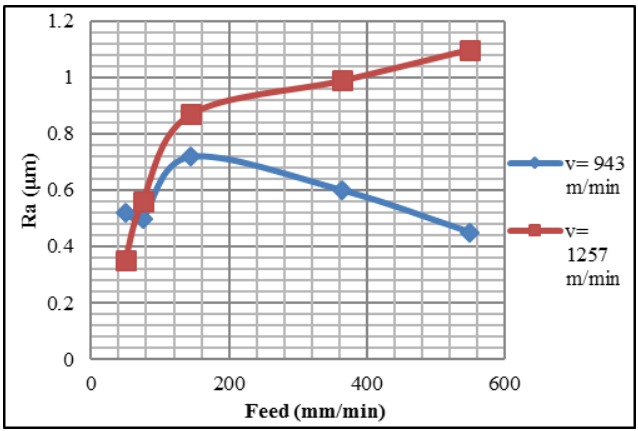
Effect of Feed Rate on Surface Roughness
3. Depth of Cut (ap & ae)
Depth of cut is divided into axial depth (ap)—the depth along the tool axis—and radial depth (ae)—the width of cut perpendicular to the tool axis. In five-axis machining, these depths can vary continuously as the tool tilts.
● Roughing operations: Larger depths (e.g., ap = 2–5 mm, ae = 50–70% of tool diameter) maximize material removal but increase cutting forces. Ensure machine rigidity and use suitable tool holders.
● Finishing operations: Smaller depths (ap = 0.2–0.5 mm, ae ≤ 20% of tool diameter) prioritize accuracy and surface finish.
Improper depth settings can cause chatter, tool breakage, or part deformation. Five-axis strategies like “sturz milling” (tilted tool) allow favorable engagement angles, reducing radial engagement and enabling higher depths without vibration.
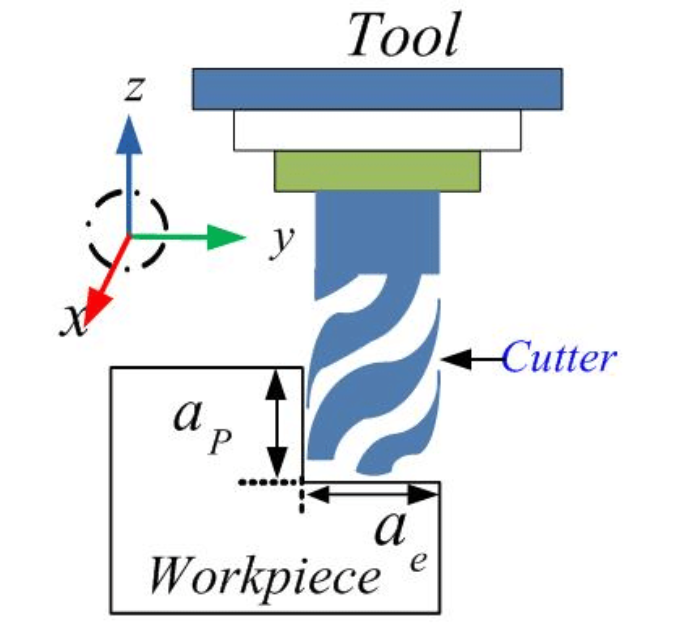
Schematic Diagram of Axial and Radial Cutting Depth
4. Special Considerations for Five-Axis Machining
Unlike traditional three-axis machining, five-axis operations involve variable tool orientation. This introduces unique challenges:
● Constant chip load: CAM algorithms must adjust feed rate to maintain chip thickness as the tool tilts.
● Tool center point management: The control system compensates for rotational movements to keep the cutting point at programmed coordinates.
● Workpiece stability: Thin-walled or cantilevered parts may require reduced depths to avoid deflection.
Advanced simulation software helps predict cutting forces and optimize parameters before metal is cut. Additionally, using high-pressure coolant through the spindle can improve chip evacuation and cooling in deep cavities.
5. Practical Optimization Tips
● Start conservative: Use manufacturer’s recommendations as baseline.
● Monitor tool wear: Adjust speed or feed if wear patterns appear abnormal.
● Use toolpath strategies: Trochoidal milling, adaptive clearing, and barrel cutters can enhance productivity.
● Test on scrap material: Validate parameters before machining production parts.
Conclusion
Mastering cutting speed, feed rate, and depth of cut is essential for successful five-axis machining. By understanding how these parameters interact and leveraging modern CAM capabilities, manufacturers can achieve shorter cycle times, superior surface finishes, and longer tool life. Always stay updated with tooling innovations and simulation tools to refine your processes.
contact-us – Contact our machining experts for personalized support.
Add: Building 3No.277 Zhen'an Middle Road, Chang'an Town,Dongguan,Guangdong, China
Tel:+86-769-82855591
Copyright © 2019 All Rights Reserved Dongguan Start Precision Technology Co., Ltd. Tel: +86-769-82855591
Add: No. 277 Zhen'an Middle Road, Chang'an Town, Dongguan, Guangdong, China



 中文版
中文版 English