Grinding and Lathe Parts Machining: Complete Solution for High-Precision Components
Date:2026-03-04Article editor:Starting Point PrecisionViews:610In precision manufacturing, few combinations are as powerful as integrating grinding with lathe parts machining. While CNC turning creates the fundamental geometry of cylindrical components, grinding delivers the final surface finish, dimensional accuracy, and geometric truth that demanding applications require. Together, these processes produce components meeting the most stringent specifications—from bearing journals and hydraulic spindles to medical implants and aerospace actuators.
Understanding the Core Processes
Lathe machining (turning) removes material by rotating the workpiece against a stationary cutting tool. It efficiently produces cylindrical features with typical tolerances of ±0.025mm to ±0.05mm and surface finishes of 0.8µm to 3.2µm Ra.
Grinding uses an abrasive wheel to remove microscopic chips of material. It achieves tolerances down to ±0.0025mm and surface finishes as fine as 0.1µm Ra. Grinding corrects heat treatment distortion, refines geometry, and imparts surface characteristics necessary for sealing, bearing, and fatigue applications.
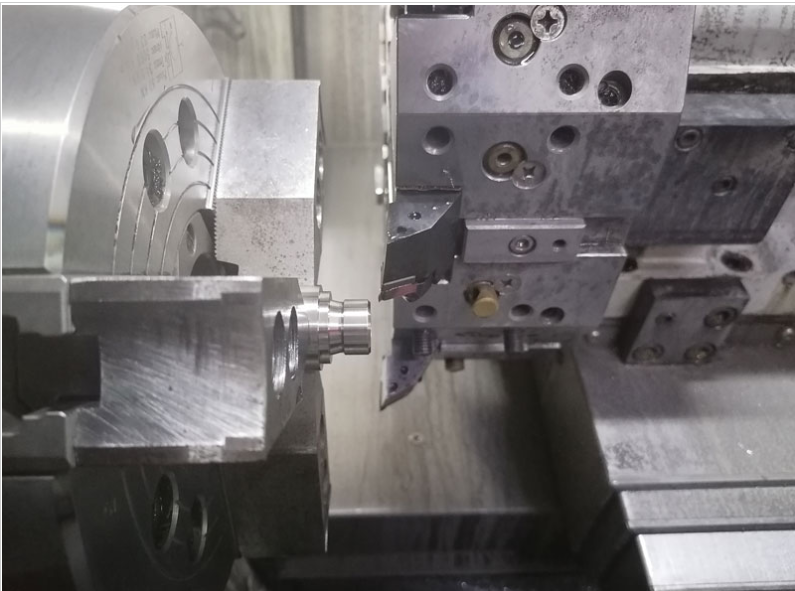
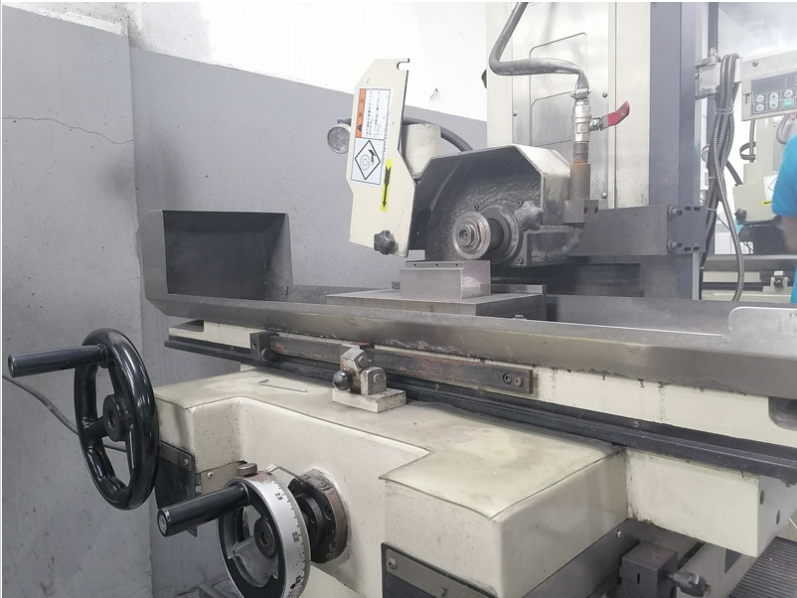
A typical precision manufacturing cell combining CNC lathe and cylindrical grinder is shown here :
Why Combine Grinding with Lathe Machining?
Many components require both processes to meet specifications:
| Requirement | Lathe Capability | Grinding Capability |
|---|---|---|
| Tight tolerances (±0.005mm) | Challenging | Routine |
| Mirror finish (0.2µm Ra) | Limited | Achievable |
| Hardened parts (>60 HRC) | Cannot machine | Ideal |
| Geometric accuracy | Good | Excellent |
The optimal approach: rough turning, heat treatment (if required), then finish grinding.
1. Precision Turning: Creating the Foundation
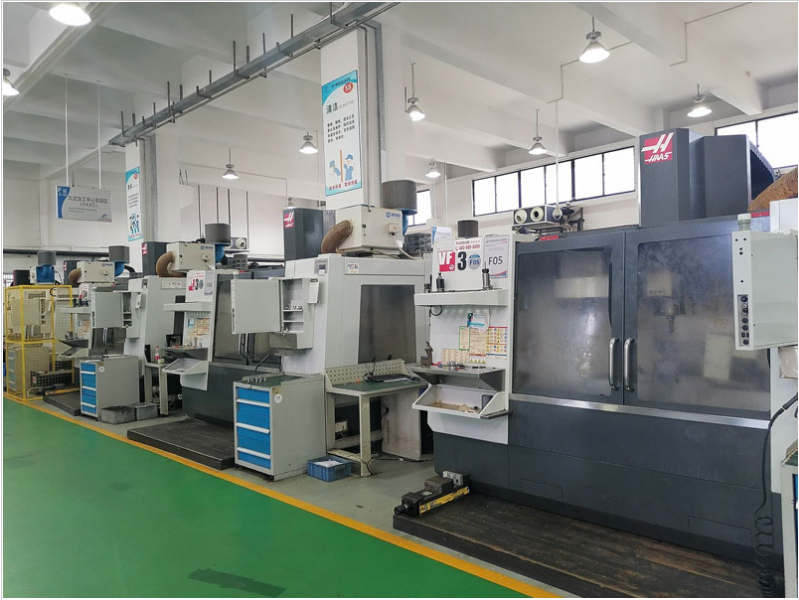
Modern CNC lathes from manufacturers like DMG MORI and INDEX offer multi-axis capability, live tooling, subspindles, and automation. For components requiring subsequent grinding, turning leaves appropriate stock allowance—typically 0.1mm to 0.3mm per side.
A CNC turning center producing pre-grind blanks is shown here:
2. Heat Treatment and Materials
Many precision components require heat treatment. Common sequences include through-hardening, case hardening, or induction hardening. After heat treatment, parts may distort—grinding corrects this while achieving final dimensions.
Materials commonly processed include:
Alloy steels: 4140, 4340, 8620
Tool steels: D2, A2, M2
Stainless steels: 17-4 PH, 440C
Exotic alloys: Inconel, Titanium
Ceramics and carbides
3. Cylindrical Grinding: Achieving Perfection
Cylindrical or centerless grinding delivers final geometry. Key capabilities include:
Outside diameter (OD) grinding: Precision diameters, shoulders, tapers
Internal diameter (ID) grinding: Accurate bores
Face grinding: Square ends, precise lengths
Form grinding: Complex profiles
Modern CNC grinders from Studer and Junker incorporate in-process gauging and automatic wheel dressing.
4. Surface Finish and Functional Performance
Grinding imparts critical surface characteristics:
| Parameter | Typical Achievable | Benefit |
|---|---|---|
| Ra | 0.1 - 0.4 µm | Reduced friction |
| Rz | 0.5 - 2.0 µm | Consistent contact |
| Bearing ratio | Controlled plateau | Oil retention |
For bearing surfaces, hydraulic spindles, and sealing diameters, these characteristics are essential.
5. Geometric Accuracy
Grinding ensures geometric truth:
Roundness: Within 0.002mm
Cylindricity: Consistent diameter along length
Concentricity: OD to ID alignment within microns
Straightness: No taper or bending
These qualities are critical for hydraulic valve spools (leakage correlates to cylindricity) and spindle shafts (runout affects accuracy).
6. Key Applications
Automotive: Fuel injector needles, transmission shafts, turbocharger rotors
Aerospace: Landing gear struts, actuator pistons, turbine shafts
Medical: Orthopedic implants, surgical instrument shafts
Hydraulics: Piston rods, valve spools, pump shafts
Tooling: Ejector pins, guide pillars, mold cores
7. Quality Assurance
Components require rigorous inspection:
Dimensional: CMM, micrometers, air gauging
Surface finish: Profilometers
Geometric: Roundness testers, cylindricity measurement
Hardness: Rockwell, Vickers
NDT: Magnetic particle, dye penetrant
Statistical process control maintains capability indices (Cpk > 1.33).
8. Cost Optimization Strategies
Combining turning and grinding adds cost but delivers necessary capability. Optimization includes:
Stock optimization: Minimize grinding allowance
Combined operations: Turn close to final size where possible
Hard turning alternatives: May replace grinding for some materials
Process integration: Automated handling between operations
Tooling strategy: Coordinate specifications
The economic decision depends on tolerance requirements, material hardness, and volume.
9. Emerging Technologies
Advancements expand capabilities:
Multi-process machines: Combined turning and grinding centers
AI-powered control: Self-optimizing cycles
Hybrid manufacturing: Additive + subtractive + grinding
Cryogenic grinding: Improved surface integrity
In-process measurement: Real-time adjustment
These push boundaries in precision cylindrical components.
Conclusion
Grinding and lathe parts machining together form a complete solution for the most demanding precision components. Turning efficiently establishes basic geometry; grinding delivers final accuracy, finish, and geometric truth. From automotive fuel systems to aerospace actuators and medical implants, this combined approach ensures reliable performance.
Whether you need prototypes, pre-production validation, or production quantities, integrating both processes ensures consistency and faster delivery. Contact our engineering team to discuss your requirements.
Add: Building 3No.277 Zhen'an Middle Road, Chang'an Town,Dongguan,Guangdong, China
Tel:+86-769-82855591
Copyright © 2019 All Rights Reserved Dongguan Start Precision Technology Co., Ltd. Tel: +86-769-82855591
Add: No. 277 Zhen'an Middle Road, Chang'an Town, Dongguan, Guangdong, China



 中文版
中文版 English